

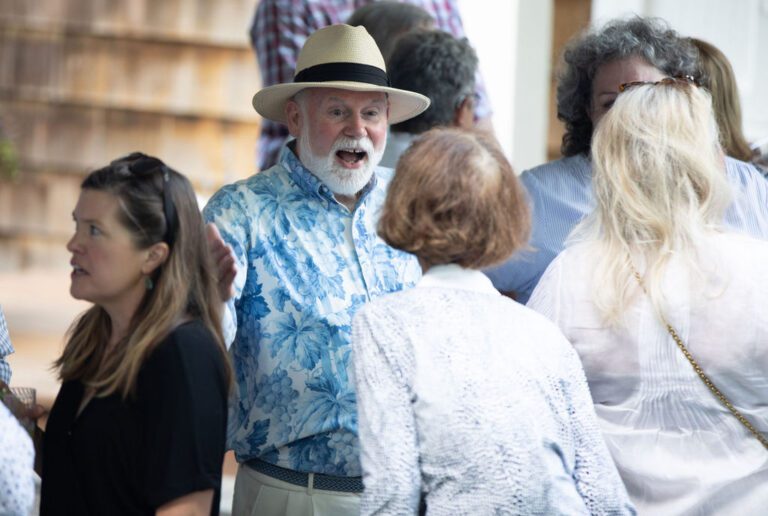
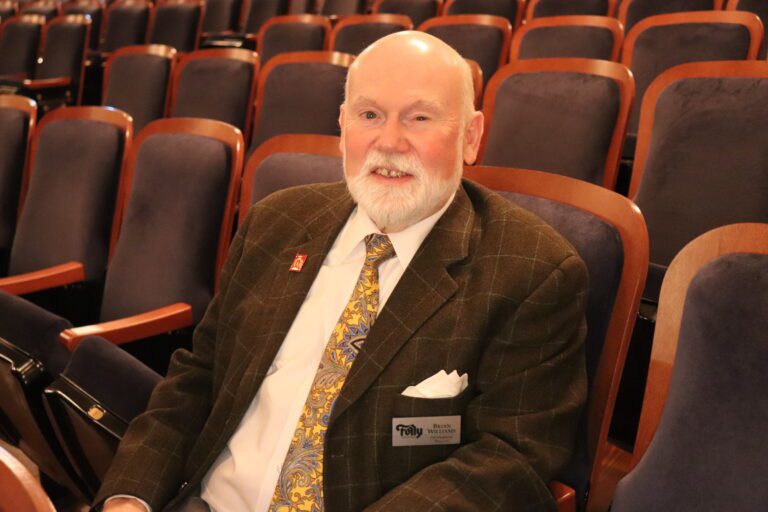
The Folly Theater announces the retirement of Brian Williams, Director of Development, effective January 15, 2027, concluding more than 12 years of service to the historic Kansas City performing arts institution. During his tenure, Williams helped strengthen the Folly’s financial foundation, expand its fundraising capabilities, modernize its historic facilities, and improve accessibility for patrons.
Since joining the Folly on January 3, 2015, Williams has helped raise more than $17 million for programming and general operations, capital improvements, and the theater’s endowment fund. These fundraising efforts are in addition to more than $1.8 million in investment returns on the endowment and over $1 million in in-kind donations. His work has helped position the Folly to sustain its mission while preserving and enhancing one of Kansas City’s treasured historic theaters.
“It has been an honor to work alongside Brian and witness his dedication to the Folly and our community. His work to strengthen our financial foundation and preserve our historic home will help ensure the Grand Lady of 12th Street welcomes audiences for generations to come,” said Rick Truman, President and CEO of the Folly Theater.
Transforming a Historic Theater
During Williams’ tenure, the Folly invested more than $7.5 million in capital improvements, upgrading essential infrastructure and enhancing the experience for performers, audiences, staff, and community partners.
Major improvements included:
Together, these improvements have strengthened the theater’s facilities, supported its technical capabilities, and enhanced the experience of attending performances and participating in events at the Folly.
Building Long-Term Financial Sustainability
One of Williams’ most significant accomplishments has been helping re-establish a sustainable endowment fund. From a balance of approximately $50,000 in 2014, the endowment grew to more than $3.4 million by late 2026. Over the preceding four years, the fund generated more than $400,000 in distributions from earnings to support general operations.
This growth has helped create a more dependable source of support for the Folly’s ongoing operations and long-term financial health.
Williams also developed a series of diverse, sustainable special events designed to engage existing supporters and introduce new donors to the theater. Events including the Folly Golf Classic, Art for Art, the Folly Garden Party, and Folly Frolic have generated more than $2.3 million over the past 12 years.
In addition, Williams developed and helped launch five biannual Community Impact Reports, providing a framework for communicating the Folly’s activities and impact to its supporters and the broader community. He also established and helped implement the theater’s first customer relationship management (CRM) database, strengthening its ability to manage donor relationships and support fundraising efforts.
Expanding Accessibility and Inclusion
Williams’ work has also helped advance the Folly’s commitment to making its historic facilities more accessible to people with physical and sensory impairments.
Accessibility improvements during his tenure included lower counters at the box office and concession area for patrons who use wheelchairs; ADA-compliant first-floor restrooms; elevator access to the Joan Kent Dillon Lounge; a hearing loop system in the performance hall; new ADA-compliant seating and seats with gated armrests; an updated website with ADA-compliant features; and sensory kits for neurodivergent patrons.
These improvements represent an important investment in welcoming a broader range of patrons and making the Folly experience more comfortable and accessible for members of the community.
A Career of Service and Leadership
Before joining the Folly, Williams practiced commercial litigation in Kansas City for 31 years. He began his legal career in 1984 with Watson Ess Marshall & Enggas after graduating from Notre Dame Law School that same year. He concluded his legal practice at Stinson LLP in December 2014 before transitioning to nonprofit arts fundraising and development at the Folly the following month.
His transition from law to arts administration brought decades of professional experience to the theater’s fundraising and organizational development efforts. Over the course of his tenure, he helped build the financial resources, donor engagement programs, and infrastructure needed to support the Folly’s continued service to Kansas City.
As Williams prepares to retire, the Folly Theater recognizes his lasting contributions to the organization and the community it serves. His work has helped preserve and improve the theater’s historic spaces, expand opportunities for donor engagement, strengthen long-term financial sustainability, and make the venue more accessible to audiences.
“Working at the Folly Theater has been one of the greatest honors and pleasures of my life,” says Brian Williams. Brian worked hard to dedicate the main hall, now known as C. Stephen Metzler Hall, to his late parter and champion of the Folly Theater. “Our community has helped me honor and advance Steve Metzler’s passionate vision of building a healthier, stronger, more vibrant, and more diverse community through the transformative power of the performing arts at the Folly Theater.”
The Folly Theater extends its sincere appreciation to Williams for his years of dedication and wishes him all the best in retirement.
About the Folly Theater
A 501(c)(3) nonprofit institution since its rebirth in 1981, the Folly Theater is Kansas City’s oldest and most beloved performance venue. Renowned for its architectural beauty, acoustics, and vibrant programming, the theater remains a cultural cornerstone in the heart of downtown. Located in downtown Kansas City, Missouri, the Folly Theater presents a diverse range of performances and cultural experiences. Through its programming, community partnerships, and stewardship of its historic facility, the Folly continues to contribute to the cultural vitality of Kansas City.